
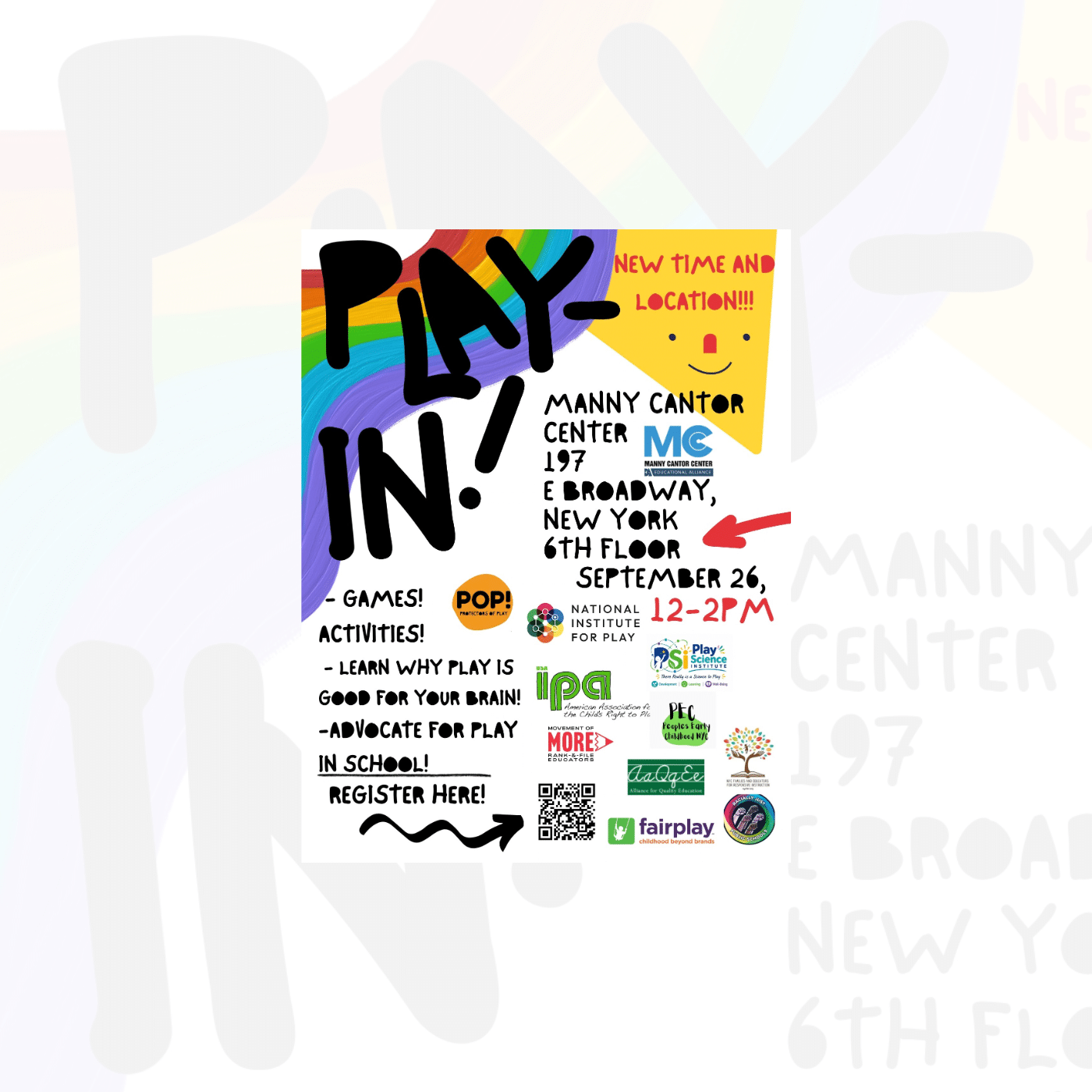
Jon talks with Dr. Beverly Falk of the High Quality Learning Project, Lauren Monaco, New York City pre-K teacher, and experienced educators Gil Schmerler and Renee Dinnerstein. They discuss the centrality of play to children’s development as confirmed by recent research on how the brain works. A “play-in” in Manhattan calls for greater emphasis on play in early childhood classes.
Overview
00:15-01:17 Intros
01:17-02:53 Play’s defining features
02:53-03:22 Defining early childhood
03:22-08:46 How children learn and develop
08:46-11:46 How central has play been historically to early childhood education
11:46-24:15 Conflict between free play and academics in the early childhood education field
24:15-28:36 Current status of play in early childhood education in NYS and NYC
28:36-29:10 Penalty Kick video promo
29:10-31:36 Patterns in community-based centers and schools
31:36-36:06 What should NYS and NYC do to reinstitute proper levels of play?
36:06-39:41 NYCplays.org: Organizing: How listeners can get involved, 9/26 Play-in
39:41-41:08 Importance of public/education officials speaking up
41:08-42:07 Play and explicit literacy instruction should be paired
42:07-44:37 Parents getting mixed messages
44:37-45:47 You can’t rush neurological development
45:47- Outro
Transcript
Click here to see the full transcription of this episode.
References
- Protectors of Play (POP) website: nycplays.org
- Join NYC Plays’ free, all-ages Play-In with games, activities, and advocacy for play in schools: September 26, 12–2 pm, at Manny Cantor Center (197 East Broadway, 6th floor, NYC). Register here!
- The High Quality Early Learning Project
- (Podcast) February 20, 2026: NYC Kindergarteners are Being Diagnosed with Play Deprivation & We Can Change It
- (Podcast) February 27, 2026: The Proposal to Fix Kindergarten that NYC’s Mayor Needs to Hear
- Renee Dinnerstein’s book “Choice Time: How to Deepen Learning Through Inquiry and Play”
Soundtrack by Poddington Bear