
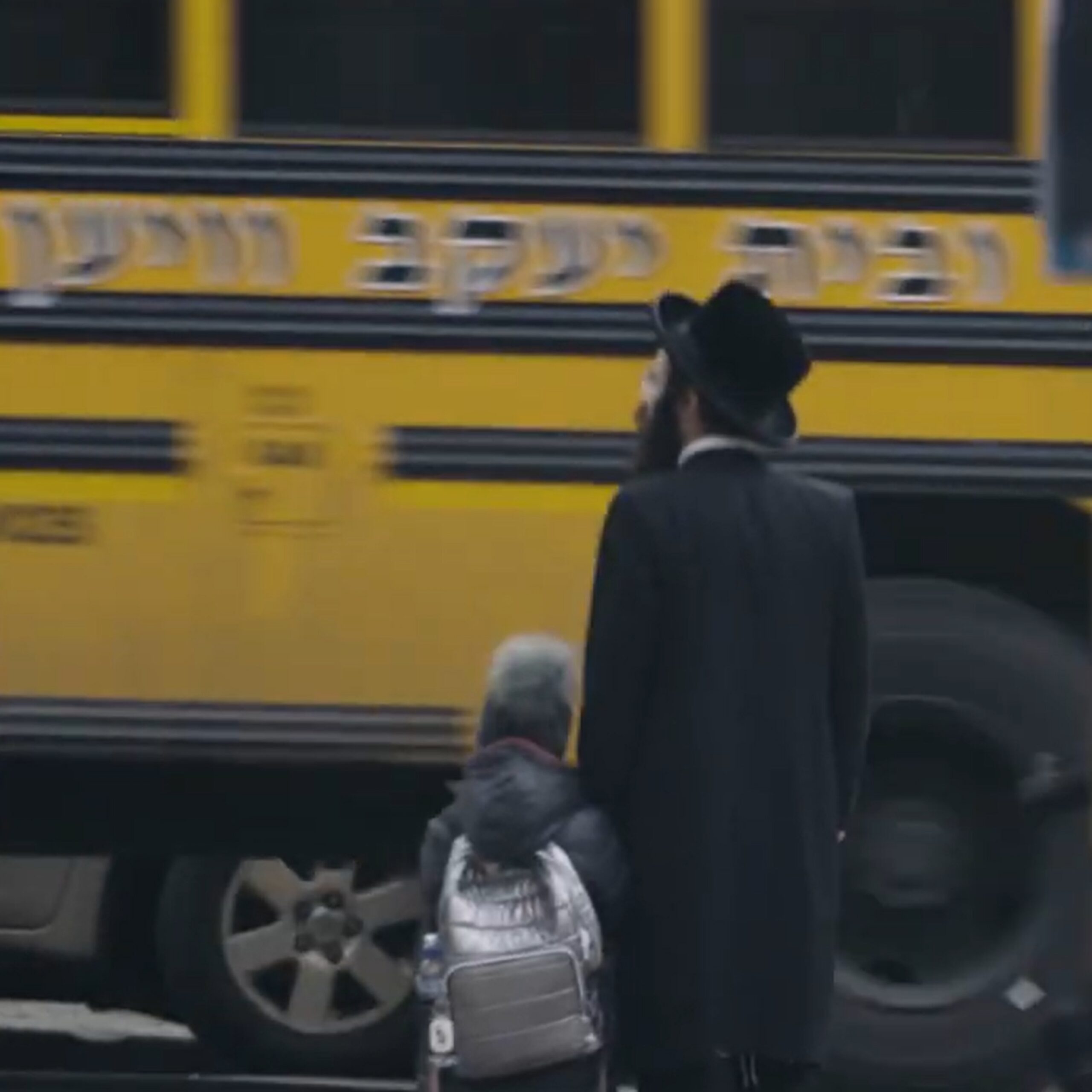
We speak with Elana Sigall and Joe Kolman, creators of “Unorthodox Education,” a documentary exposé of NYC’s ultra-Orthodox yeshivas. Each year, thousands of students graduate from these schools with little to no secular education. They are unprepared for college, careers, or life outside their insular communities. Because of their communities’ extraordinary political power, elected officials are complicit in failing the students. The film tells the stories of schools, students, the fight to hold the schools accountable, and the obstacles to be overcome.
Overview
00:00-00:47 Intros
00:47-06:21 Initial involvement in “Unorthodox Education”
06:21-09:21 Core subjects missing from yeshivas’ curriculum
09:21-09:59 Number of yeshivas in New York State
09:59-11:54 Differences in girls’ and boys’ education
11:54-14:50 Yeshivas’ justification for not providing secular education
14:50-15:37 Strategy for making sure students remain in the community?
15:37-18:59 How the refusal to provide secular education is maintained
18:59-22:17 Reasons for increased refusal over time to offer secular education
22:17-25:09 Experiences and struggles of students who want a secular education and those who leave the community
25:09-25:55 Ages at which people leave the community
25:55-26:46 Role of New York State Education Department
26:46-28:51 Politicians’ actions and justifications
28:51-30:48 Fears of accusations of antisemitism
30:48-33:17 Obstacles in funding and distribution of the film
33:17-35:44 Current state of things
35:44-37:44 What listeners can do
Resources
-
Learn more about the documentary, its filmmakers, and upcoming screenings on the official Unorthodox Education website.
-
The filmmakers also discuss the work of Yaffed, an organization advocating for the right of children in Hasidic and Haredi schools to receive an adequate secular education.
Transcript
[00:00:15] Jon M: I’m Jon Moscow.
[00:00:17] Amy H-L: And I’m Amy Halpern-Laff. Our guests today are Elana Sigall and Joe Kolman, the producer and director, respectively, of Unorthodox Education, a documentary film about the fight to ensure that students in ultra-Orthodox yeshivas in New York City receive a basic secular education, and the current state of the battle. Welcome, Elana and Joe.
[00:00:40] Joe K: Thank you.
[00:00:41] Elana S: Thank you very much. Thanks for having us.
[00:00:44] Jon M: How did each of you become involved with this film?
[00:00:47] Joe K: Well, I guess I should start because I was … It started with me. I learned that a lot of Jewish kids were not getting the secular education they needed in these ultra-Orthodox schools, and I was kind of shocked by that because my mother had gone to a yeshiva in Tel Aviv when she was growing up and got a religious education, but also got a really good secular education, and later went on to law school. The idea that there was some conflict between religious practice and secular education seemed crazy to me, and was the rationale for denying these kids in New York City and upstate New York this basic education. So I was furious, and I started learning more and more about it.
And as a journalist, I got involved and decided to do a documentary. That was 2020. Originally, I thought we’d do a short video where we would interview a few people and explain the situation, and I did that. Right before COVID began, we finished this eight-minute documentary, and people said they didn’t understand what I had done because they couldn’t understand why people would deprive their own kids of an education.
So I started expanding the film, and during COVID I managed to film a bunch more people, and then I ran into Elana in the course of that expansion.
[00:02:16] Jon M: Great. Elana, would you like to add to that?
[00:02:20] Elana S: Sure. I like to tell the story of how Joe came to me, but first I’ll say that I’m a lawyer by training and I do education policy work, and I had worked in a high-level policy position for New York City. I was the head of special education policy for New York City, and then I went on to be the governor’s education advisor. And in those two roles, I was visiting quite a few yeshivas and yeshiva programs, and I was working with people in the ultra-Orthodox community, and I was learning a lot about what was going on in their schools.
Joe came to me during COVID. He found out that I was something of an expert on this issue. I had started working after I left the governor with people who were trying to leave the community. I became an education advisor for a lot of those families to help them find different schools and different placements for their kids.
And Joe came to me, and at first I was in the film as an interviewee, and then he came back to me and asked me if I would narrate the film. And I thought that was kind of an odd request since I’m not an actor. I have a daughter who’s in the theater, but I don’t know anything about acting. And I told him that, and he said, “No, no, no, the editor and I have decided that you would be the best narrator for the film.”
So he handed me the script, and I said, “You know, I can’t read this. This isn’t really correct.” And he handed me a pen and said, “Well, fix it.” So that’s kind of how our relationship really got going, and I rewrote the script, I did the narration, and then I kind of forgot about the whole thing. It was COVID. We were isolated.
We were not in normal times. And then a couple of months later, he sent me a link and said, “Hey, I’m about to put this up on YouTube, but I thought you might wanna take a look.” And I watched it, and I was absolutely floored. I, of course, had no idea what kind of stories he had been able to get, what kinds of conversations he’d had with people. I had no idea he had been able to create relationships with the subjects in the film. And I was just so bowled over and impressed by his storytelling, and I was so moved by the film and the way he had been able to… You know, these were all issues I was very familiar with. And in fact, some of the people in the film I knew very well.
But the way that he had told the story was really moving. And, I hurried off the screen to call him, afraid that he was about to push a button, and said, “Don’t put this on YouTube. Don’t put this on YouTube. We have to do something with it. We need to expand it. I think this could really go places, and I think that if we work on this some more, we could expand it. We could really have a tool for educating the public in a very deep way about these issues.” And so that’s when our partnership started, and we found more subjects for the film. I included more people that I knew. We added women to the story in a broader way, and I think we make a really good team.
[00:06:19] Amy H-L: What core subjects are missing from the yeshiva curriculum?
[00:06:25] Joe K: All of them.
[00:06:27] Elana S: Yeah, all of them. There’s sort of a couple of answers to that. One is that they pretty openly do not teach social studies and science. They will say that. So that’s out. And then the math. And of course, we don’t want to overgeneralize. These schools are varied. There are many of them. They are in parts of different sects and different groups. So it’s not a monolith. But in the worst-performing schools, let’s say, they really don’t teach English or math either. I was in a school once where the principal proudly told me that when the boys finish their secular education at the age of 13, the goal is for them to be on a second or third-grade level. I would actually say they’re not that advanced, but that’s the goal. So there’s a lot of spelling and simple arithmetic, but there’s not much else. That same principal, actually, when I asked him if he teaches social studies, he said, “Well, they should know who the president is and if there was a hurricane somewhere.” So that’s sort of one piece.
And then another piece that we don’t really address in the film, but I think is important for the broader understanding, is that there is this idea that these schools are offering a rigorous education in religious subjects, not just ritual and prayer, but they’re actually wrestling with religious texts. And that is true in some schools, but it is not true in all of those schools. Many of those schools are really not offering a rigorous education based on religious texts either. And I think that’s important because that’s been a part of the mythology and also something that some of these schools have hidden behind, in my view, that you don’t know what we’re actually doing because it’s not in English and it’s outside of the purview of secular education, and we’re really doing something special and meaningful and rigorous in this area, and it’s robust. That is true sometimes, but it is often not the case.
[00:09:18] Amy H-L: So there’s a lot of variation among these different yeshivas, How many are there actually in New York City?
[00:09:28] Elana S: We know that there are about 260 Hasidic schools in New York State, but there are also other ultra-Orthodox schools that are not Hasidic.
There are other movements, sects, within the ultra-Orthodox world, yeshivish schools, other types of schools. We know that it’s affecting tens of thousands of children.
[00:09:56] Amy H-L: And what are the differences in the education that girls and boys receive in these yeshivas? And are they co-ed?
[00:10:06] Elana S: Oh, they’re definitely not co-ed. So one of the things that we wrestled with a bit in the film is that there has also been a sense in the movement that the boys are far worse off. And while it is true that the boys get much, much less than the girls do, what the girls get is also not anything that you would want for your child. The boys stop their secular education at the age of 13, so whatever little they’re getting, they stop. The girls get more basics. So they might get, in some of their schools, some social studies, some science, more reading. They tend to have better reading and writing skills than the boys do, but that doesn’t mean that they have strong skills in those areas. It just means that they get something that’s a bit more serviceable. One of the things that I think answers that question best is that in the girls’ school, like in the boys’ school, you don’t find teachers who are college-educated. The teachers in those schools are people who have been educated in those same schools.
In fact, one of the subjects in our film talks about that when she finished school, instead of going to college, she became the eighth grade English language arts teacher at the same school that she had gone to.
[00:11:51] Jon M: What’s the justification that the yeshivas give for not giving a basic secular education?
[00:12:01] Joe K: It’s interesting. They claim that the kids are going to get great education through their Torah learning, through their religious instruction. But of course, if you don’t have a basic, you know, math, science education, you’re not going to be able to live in the world we live in today. So this idea that everything can be taught via religious study is simply inaccurate. You need to understand how the planets work. You need to understand how America works, the Constitution, things like that, that you get in a normal secular education. You need math skills. Some of the people that we interviewed said that they were never taught two plus two is four, for instance. I regularly talk to a lot of the Hasidic graduates of these schools, and one of the questions I ask them is, “What’s one fourth of 40?” And I’d say that half the people I talk to can’t answer that question. So very basic understanding of math just isn’t there.
And it gets worse. The more, closer you get into it I think one of the things that I’ve found in working with these communities is that they truly don’t believe that the children need these skills and this information for the lives that they are intended to live.
So if you’re going to be in, in one of these communities, and you’re going to spend your life in there, you don’t need to know what one fourth of 40 is because the kind of work you’re going to do or the kind of activities that you’re going to be engaged in don’t require this. You know, I, I one time had a meeting in a case I was working on trying, where the parents were battling over whether the child was going to stay in the Hasidic school.
I had a meeting with the parent who was staying in the community. I had a meeting with his kind of advisor, and the advisor said to me, “What does this kid need biology for? He’s going to be sitting in a warehouse or driving a truck.” So that’s sort of the worldview. And I should add that I have friends of ours who are Hasidic, and when I asked them about their son-in-law, he hasn’t gotten a secular education, they tell me, “Well, when he’s 18, he’ll get the education that he needs.”
So their idea is after they’re married, they can get a secular education in terms of trade or [inaudible] like that. But until then, something vocational, right? Yeah. So something you do after you’re married. By, by then, of course, it’s too late.
[00:14:47] Amy H-L: Right. I have a darker question. Is some of this strategic to make sure that these students never leave the community because they’re not prepared to live anyplace else?
[00:15:03] Joe K: That is the goal. That’s the whole goal of the educational system, as I see it. Okay. And as somebody outside of that community – not that I’m an anthropologist, but the people inside of the community have told us that is their experience.
[00:15:34] Amy H-L: As the world, the laws, the people around them have become more invasive, it seems that the failure to provide a basic secular education has only increased. So would you explain how that happens?
[00:15:56] Joe K: I’d say the answer is 100,000 votes, more or less. There’s 100,000 votes in Brooklyn and maybe Upstate New York where people can control and contribute to whatever campaign they want. And politicians, Republicans and Democrats, are trying to get those votes. It’s very difficult to win a New York City mayoral primary without those votes. So once you have 100,000 votes, it’s a pretty straightforward proposition to argue with the people that are running for office that, “Why don’t you cut us a deal here?” And that’s been the case for, a decade or more, even including the, the current mayor, Mamdani. In fact, I’d go farther than that. I’d say that the entire legislative branch of the government, including Governor Hochul, Mayor Mamdani, the state legislators, the executive branch. Anybody running for office in New York needs those votes, executive or legislative branch, yes. So they’ve completely caved in to this voting bloc. And the only branch of government that’s left to take care of these kids is the judicial branch. That’s, I think, the strategy that they’re using to protect the rights of these kids.
[00:17:14] Elana S: But in New York, some judges are also elected, so it becomes a problem in that area as well. And we have encountered, and I have encountered in my work, judges who appear to be in the tank for the community. I worked on a case where the judge decided to ignore what was presented to her, the expert testimony, and decided instead that she would make her own assessment of the schools. And she went into the schools and they were very nice to her, and so she decided that they were fine. I’m short-handing, but essentially that is the position that she took.
There’s a lot of fear, I think, on the part of elected officials to brave this. And it takes an enormous amount of courage, and we haven’t seen many politicians who have that courage. There are some, and there are more and more.
And the advocacy group, Yaffed, that works on this and that we feature in the film, would tell you that in the past 10 or so years that this movement has been going on, they have built relationships with politicians in New York who are beginning to speak up and speak out, and that’s really the hope that we have.
[00:18:56] Jon M: I definitely want to come back to these questions about the role of the elected officials who are allowing this, not fighting this, participating in it, whatever. But I wanted to go back to an aspect of Amy’s question about the relationship between society as a whole and the separateness. I think it was you, Joe, when we were talking earlier, who mentioned that after World War II, some of these communities were in fact more open to including secular education, and that they’ve become more separate over time. And I just wanted to know if you had a sense of whether that’s the case, why that progression has happened, why internally there have been these changes. I don’t know if that’s anything…
[00:19:49] Joe K: yeah. It’s very clear that when a group of ultra-Orthodox people came from Eastern Europe after the Holocaust, they had to settle in Brooklyn, and they didn’t really know what was going to happen to them, as we talk about in the film. And the first generation needed to get settled, they needed to get set up, they needed to make a living. And so the yeshivas were much more geared towards secular education and helping them establish themselves in the world. But as the community got more successful and established, it also became more isolated, and it said, “We don’t need this. We can become more religious now. We can afford to become more religious.” And it’s been a slow but steady progress from the ’50s down to where we are today in terms of the decline of secular education to the point where now there’s very little expected of these kids.
[00:20:53] Elana S: I would also say there are two other practical aspects. One is the community has grown exponentially over time. They have a lot of children. The community is getting bigger and bigger. It gets harder and harder to offer something meaningful, even in the sort of religious arena, as far as religious education. And I also think that as the world has become more threatening with the rise of internet and the possibility of more and more easy exposure to the outside world, it becomes harder and harder for those communities to remain insulated and insular. And so they have doubled down on that, phones and… It used to be if you didn’t want people to have access to the secular world, you just didn’t deliver the newspaper to them. But it’s a lot harder to bar access now, and I think that that has led to a doubling down for fear of what might be coming in.
[00:22:14] Amy H-L: So what are the struggles and experiences of ultra-Orthodox students who want a secular education?
[00:22:24] Joe K: Well, in our film, we show many people who are struggling, and a lot of the people we show in the film are actually people who succeeded in spite of these enormous difficulties. They’ve taught themselves English, they’ve taught themselves math, and they’ve climbed to the top and become professionals of one kind or another.
But those are the exceptions to the rule. I’d say the 99th percentile of the people who managed to succeed, that there are thousands of kids who never got an education, who were trapped between one world and another. They don’t have the secular education they need to succeed in the secular world, and yet they don’t have the support system of being in the religious community. So they’re sort of stuck in the middle.
[00:23:14] Jon M: What’s happened to the students who have left the community? What have their experiences been once they’ve left?
[00:23:22] Elana S: So one thing I just want to interject here, and I’ll let Joe answer that, but we talked to many people and we tried to talk to many people in the making of this movie, and what I would say is that one of the flaws of the project is that we really are mostly able to feature people who are the rare successes. Most people who want to leave or try to leave really struggle, and those people also don’t want to be on film, and they’re also too vulnerable to tell their stories. So we’re familiar with the broad range of what happens, but the people we were able to really feature are the exceptional ones.
[00:24:17] Joe K: Well, with the one exception, actually. We have a young man named Joseph, and we follow him through his struggle leaving at age 17 and trying to get a job, and he was fired from his waiter job because he couldn’t write down the orders, and he tried to succeed doing one thing or another. I’ve been in touch with him through the last few years and he’s I think he’s maybe involved in driving a truck now. So he’s trying to figure out a place for himself in the world, and it’s extremely difficult. But they’re enormously brave people who have left their families and support systems behind. They have nothing but each other, really. And they’re also exposed to scams in the world that they’re not aware of, and it’s a rough, it’s a rough life.
[00:25:06] Amy H-L: Does that tend to be the average age, around 17, or are there younger students who may realize what they’re missing, or even their parents at some point?
[00:25:19] Elana S: That’s definitely not the typical age in what we’ve seen. Many people leave after they’ve already had children, which makes it very complicated for them. He was unusual. He ran away because he was a minor when he left. So if you decide you want to leave the community when you’re 21, you often have to deal with a marriage or, and/or kids, and that’s just multiplying the problems.
[00:25:52] Amy H-L: So what has the state education department tried to do in terms of enforcing the actual education laws over the years?
[00:26:04] Joe K: Well, they actually started enforcing the laws as of May of last year, and then the state legislature forced them to stop enforcing the law. And it’s completely outrageous. I mean, the state legislature met in the budget hearing and they agreed. Democrats and Republicans agreed to prevent the state education department from enforcing the law. I don’t know how often that happens in government, but that’s an outrageous breach of the of the public’s trust, in my opinion, by both Republicans and Democrats and the governor.
[00:26:43] Jon M: So you’ve talked about what the politicians have been doing. What justifications, if any, do they give besides the fact that they want these 100,000 votes?
[00:26:56] Elana S: Well, I would, I would add one other thing. Betty Rosa, who’s the head of the state education department now, she’s actually been a pretty good ally. There was a lawsuit against a specific yeshiva that I worked on, and she actually took up some of the arguments that we made in the assessment of what was going on at that school to say that it was not acceptable.
But what the governor will say is, “Hey, you know, there are standards. Of course there are standards. We’re just creating lots of different options for you to show how you meet these standards.” And that’s not unusual in how regulations work. It’s just that they’ve managed to create different sort of pathways or options to show how you’re meeting the terms of regulations.
But in this case, they created some options that are completely empty. So the latest option that was created in New York in the past year is that if the yeshiva has students sit for an exam, a standardized and enough of them, a certain percentage, actually sit for the exam, then they are deemed to be in compliance with the law. They don’t have to perform in any particular way on the exam. They don’t even have to achieve any particular result. They just actually have to sit in a room and take the exam. I know I’m on audio, but I’m using air quotes when I say that because since there are no standards about how you have to perform on the test.
[00:28:48] Amy H-L: So when politicians who are not Jewish try and enforce the law, are there any accusations of antisemitism?
[00:29:01] Elana S: I think there’s a lot of fear about that, and certainly in the film we have some lawmakers who voice that accusation In the Orthodox or ultra-Orthodox community, this is seen as a threat to religious practice somehow.
[00:29:18] Joe K: So that’s the issue. I think one of the things that’s important for us to say too is that all of the people involved in this movement and all of the people involved in the making of the film are Jewish. And I think it’s really important to point out that one of my own personal fears about this, as a person with a strong Jewish identity, is that this ultra-Orthodox community and this ultra-Orthodox ways of life are becoming the normative Jewish identity in places like New York.
You know, we’ve seen where mayors put together Jewish advisory panels where all of the people on the panel are ultra-Orthodox men. These people do not get to decide and speak for all Jews in New York, and I think that it’s a big danger. And so I say that to say we don’t believe that it’s antisemitism to criticize what some people are doing who are Jewish. We’re also Jewish.
[00:30:46] Amy H-L: What obstacles did you run into in making and showing the film?
[00:30:51] Joe K: Well, I would say that there’s a lot of fear within the Jewish community in showing this film because people are afraid of offending their Orthodox friends and colleagues. And we run into that face to face. Some synagogues will show a Holocaust film without any issues, but this film is somehow a problem for them.
And I think it’s interesting because I think that there’s, even though the modern Orthodox world is not engaged in these kind of practices, there is a sense that, or a fear that, modern Orthodox people will be offended by this message. I’m not sure that’s true, but that is a fear.
[00:31:46] Jon M: So how did this manifest itself when you were making the film? What obstacles did the fear create for you? Did you have difficulty in terms of getting funding or in terms of theater owners being willing to show it? Distribution, or any of these kinds of questions?
[00:32:06] Joe K: No, there was nothing involved in the making of the film that was, that received any opposition. It’s actually just getting distribution for the film in various venues, like Jewish film festivals or, I think a lot of them are afraid to take on this topic. And showings in synagogues – people are afraid to do it. And certainly funding. We weren’t able to secure any funding from the established Jewish groups that provide funding for these kind of films. So that’s mostly to be expected, I suppose. It’s a controversial film. There’s no question about it.
[00:32:39] Elana S: And I think since October 7th, there has been a lot of anxiety about any criticism of any aspect of the Jewish community. And we have certainly encountered that. We’ve been told this is not a time to be critical of Jews. We don’t agree with that, but that’s what we’ve been hearing.
[00:33:04] Joe K: If you’re going to wait for antisemitism to calm down before you can accept an idea, this is a problem. You’re going to be waiting a long time.
[00:33:14] Jon M: So you mentioned that the state legislature has totally undercut the efforts by the state ed department to enforce the law. What actually have the legislature and the governor done? What is the current status of things?
[00:33:31] Joe K: Well, I guess the current state of things the law that they put on the books, which is that there are numerous loopholes that are really designed to extend the time when this issue comes to a head.
So you can delay it, the whole issue, for another five or 10 years, and that’s built into the legislation, and that’s what’s happening. Just as a point of background, there’s a law that’s on the books for over 100 years, the substantial equivalency law. And what the law says is you can go to a private school in New York, but it has to offer a substantially equivalent secular education to a public school. This is an idea that is rooted in constitutional law, federal constitutional law. What happened is that there were never any implementing regulations to allow people to apply that law. So when you have a law like that, people need to know the nuts and bolts. How do I know something’s substantially equivalent? What do I look for? What are the things? And it’s the job of the legislature to enact implementing regulations so that you know how to implement any law. In New York, we never did that. There were no implementing regulations, so the law was never enforced. We finally got some last March, and then they finally started applying the law, and then lo and behold, two months later, the governor said, “You know what? Let’s put a pause on this. We’re going to give it a little more time before we really apply these regulations. We’re going to put in some new ones. We’re going to say you can meet the terms of this by having kids just sit for an exam that they don’t have to pass. So we’re not not applying the law, we’re just making the way we apply it a little bit more relaxed. And that’s what’s happened.
[00:35:41] Amy H-L: So given the capitulation by the state, what can our listeners, especially our Jewish listeners, do to try and change the situation?
[00:35:53] Elana S: Well, one thing I think is important is for New Yorkers especially, but also people across the country, but New Yorkers especially, to know that your tax dollars are supporting these schools. And it’s not an issue we really get into in depth in the movie, just because we were time-limited in what we could include. But tax dollars are supporting these schools in a variety of ways, and supporting these communities extensively. So if you don’t want your tax dollars to be supporting the forced under-education of children, then you need to tell your representatives that you don’t want that. I also would just say I hope more and more communities will be open to seeing the film and to understanding what really is at stake, and to dispelling the myth that we’ve contended with that, “Well, the schools are Jewish, and Jewish people value education, so they must be getting a really good education even if you don’t think they’re learning the exact material that you think they should be learning.” We’re not getting into the weeds about material. We’re talking about kids who are learning nothing. And that if people wanna see some change, I should give a shout-out to an organization that we work with is Yaffed, Y-A-F-F-E-D, .org. If you join that organization, you’ll learn what you can do to make some change happen.
[00:37:43] Jon M: You mentioned when we were talking before that there is a lawsuit challenging what’s going on. Could you just briefly mention what’s happening with that and if there’s any way that listeners can be supportive?
[00:37:58] Elana S: So there’s a lawsuit going on right now in state court in New York. Decisions are pending there about a motion to dismiss the lawsuit. But it’s a class action against the state of New York for retracting the regulations and for allowing these kids to experience this sort of failure of their schools and of the government to protect them. We don’t know what’s going to happen, but we have one of the premier civil rights litigators of our time in the field of education, Michael Rebell, who led the lawsuit for the Campaign for Fiscal Equity, which reformed the way money is distributed in New York State for education, and the law firm of Quinn Emanuel has joined forces with him, and so we’re very hopeful that we may see some change.
We’ve had a few hearings. The judge has seemed very interested in really trying to understand what’s at stake and what’s going on, so we’re hoping that we get some justice for these children, because in the end, this is all about trying to get the rights of Jewish children protected. If their families and their parents want to live in particular ways, we are not objecting to that. We’re objecting to creating generations of children who have no choice in the matter.
[00:39:56] Jon M: Thank you, Elana Sigall and Joe Kolman, producer and director of Unorthodox Education.
[00:40:02] Amy H-L: And thank you, listeners. If you found this podcast worthwhile, please share it with friends and colleagues. Subscribe wherever you get your podcasts, and give us a rating or review. This helps others to find the show. Check out our website for more episodes and videos, and subscribe to our monthly emails. We post annotated transcripts of our interviews to make them easy to use in workshops or classes. Contact us at hosts@ethicalschools.org. We’re on Bluesky, Facebook, Instagram, Threads, and LinkedIn.
Our editor and social media manager is Amanda Denti. Until next time.
Soundtrack by Poddington Bear
Image: Frame from Unorthodox Education, directed by Joe Kolman.
Related listening
In School Choice: Who Does the Choosing?, we speak with Dr. Ujju Aggarwal about educational choice, exclusion, and inequality. Both conversations raise questions about whose interests school systems serve and who bears the consequences of educational decisions.