Critical Thinking

Educating for The World We Want: Learning to Citizen with Green School Bali

We share brief presentations from the fourth “Global Saturday Salons” that Ethical Schools is sponsoring with three international partners. Dr. Benjamin Freud is the Strategic Lead for Regenerative Education at the Green School Bali, Manon Tiange is a Grade 12 student mapping labor invisibility and systemic inequality in Bali, and Scarlett Gonella is a Grade 12 student investigating plastic pollution and advocating for clean water access in Indonesia. They talked about an educational culture rooted in contribution to community. Learners are trusted to ask difficult questions, collaborate across generations, and imagine reform at the highest levels.

This salon series is called Learning to Citizen: Tales of Youth Voices, Agency, and Care. Our goal is to honor learners and teachers who are already doing the work practicing care, enacting citizenship, and learning how to regenerate their worlds. Discover more and join us on May 30th to learn with members of The Brotherhood Sister Sol: edfortheworldwewant.net

Read More

Literature as identity-affirming, teaching as liberatory

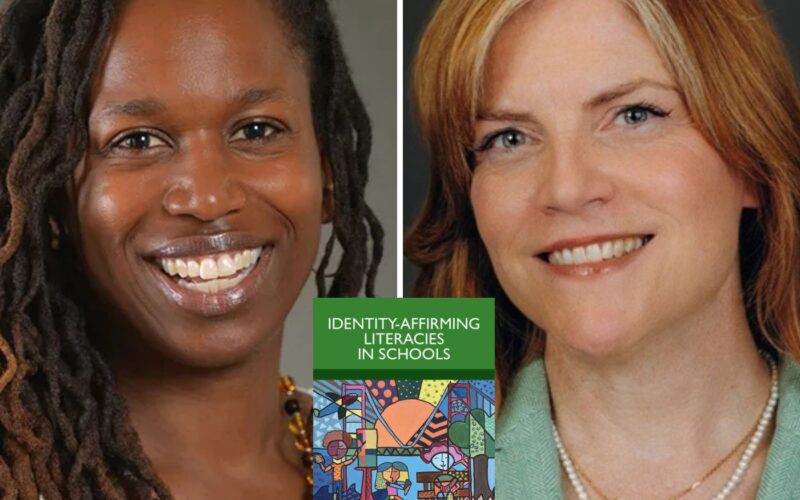
Dr. Chantal Francois and Dr. Jen McLaughlin Cahill, co-authors of Identity-Affirming Literacies in Schools, discuss their time at the school they call Pearl Street Collaborative, a progressive secondary school on Manhattan’s Lower East Side that prioritizes teacher inquiry and collaboration. Schedules include time for teachers to meet frequently with grade and content colleagues. Drawing on the work of Freire and Lilia Bartolomé, Drs. Francois and McLaughlin Cahill used literature to support students’ identities, including by integrating an LGBTQ+ focus into English classes.

Read More

Global Conversations: Nature, Place, and Education, Salon #3

We share brief presentations from the third of the “Saturday Salons” that Ethical Schools is sponsoring with three international partners. Kerry Kirk Pflugh is the executive director of the New Jersey School of Conservation. She also comes with extensive background experience at the New Jersey Department of Environmental Protection. Tom Roderick is the author most recently of Teach for Climate Justice: A Vision for Transforming Education. He was also the Founding Executive Director of Morningside Center for Teaching Social Responsibility. Deb L. Morrison is a Learning Designer and Advisor at the University of Washington and a Lead Author on the Intergovernmental Panel on Climate Change Assessment Report 7. They talk about how educators can respond to the urgent environmental crises we face.

Learn more and join at globalconversations.net

Read More

Global Conversations: Nature, Place, and Education, Salon #2

We share brief presentations from the second of the “Saturday Salons” that Ethical Schools is sponsoring with three international partners. Sherry Johnson, Tribal Education Director of the Sisseton-Wahpeton-Oyate (South Dakota), Deepak Ramola, Founder of Project FUEL (India), and Charlotte Hankin of Coconut Thinking and the Green School (Bali) talk about the importance of stories in reshaping how we think about our relationship to the natural world.

Learn more and register for the third salon on February 21 at globalconversations.net

Read More

Global Conversations: Nature, Place, and Education

We share brief presentations from the first of the “Saturday Salons” that Ethical Schools is sponsoring with three international partners. Juan Mora of the Center for Artistry and Scholarship and Ramji Raghavan of Agastya International Foundation talk about how educators and communities can cultivate awareness of and relationship to the natural world.

Learn more and register for the next salon at globalconversations.net

Read More

Pop culture literacies: Engaging students in critical analysis

We speak with Dr. Mia Hood, author of  Pop Culture Literacies: Teaching Interpretation, Response, and Composition in a Digital World, about analyzing popular music and films along with more traditional literature. Dr. Hood talks about helping students to think about their ethical perspectives while engaging with “entertainment,” and the importance of educators’ resisting the temptation to impose their own “expert” interpretations in favor of modeling the process. We also discuss how teachers can resist imposing their views while teaching for democracy and social justice.

Read More